Exploring Thailand’s 250+ golf courses across Bangkok, Pattaya, Hua Hin, and beyond plus why this remains Southeast Asia’s ultimate golf destination
Thailand has cemented its reputation as Asia’s golf tourism powerhouse, and for good reason. With approximately 250 golf courses scattered across the kingdom though realistically, about over 100 of these are genuinely suitable for international tourists Thailand offers an unmatched combination of championship-quality golf, world-class hospitality, incredible food, and value that makes Western golf destinations look eye-wateringly expensive by comparison.
While Vietnam has been making headlines with its explosive golf development over the past two years, Thailand remains the gold standard that every other Southeast Asian country measures itself against. And honestly? There’s something special about Thai golf that transcends mere course counts or fancy new openings. It’s the complete experience the famous Thai smiles, the professional caddies who somehow know exactly what club you need before you do, the post-round pad thai that tastes better than anything back home, and the realization that you’ve just played a championship course for less than a municipal round costs in Sydney or London.
Let’s break down exactly where Thailand’s golf courses are located, what makes this destination still extraordinary despite slower recent development, and why Thailand should absolutely be on your golf bucket list.
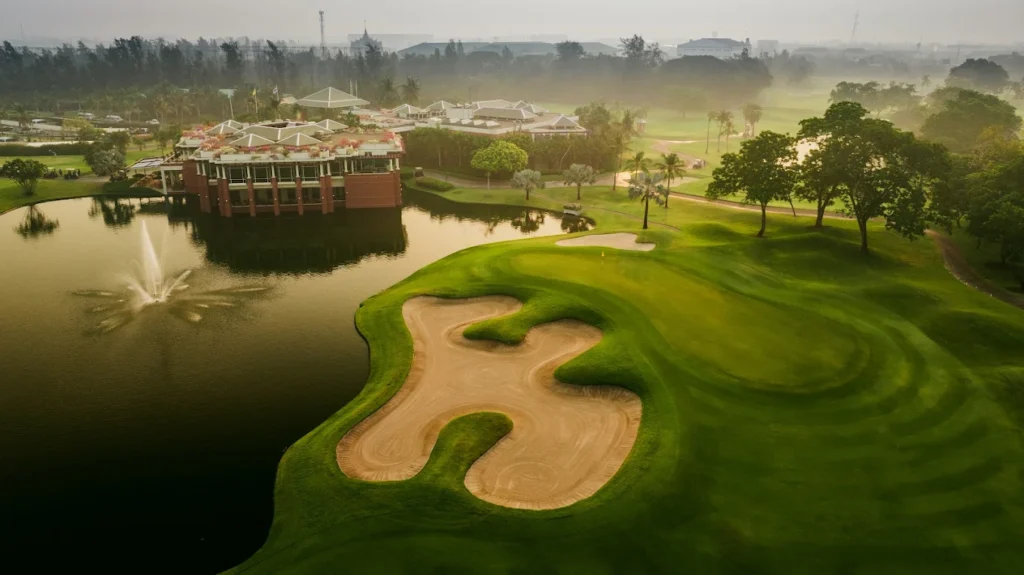
Thailand’s capital isn’t just the country’s largest city it’s also the undisputed golf capital with more than 50 golf courses within reasonable driving distance of the city center. This concentration means you could theoretically play a different Bangkok course every weekend for an entire year without repeating.
The variety here is staggering. You’ve got ultra-premium clubs like Thai Country Club and Alpine Golf Club where green fees push $200+ and you’re rubbing shoulders with Bangkok’s elite. You’ve got solid mid-range options like Muang Kaew and Panya Indra where $80-120 gets you excellent conditions and good service. And you’ve got budget-friendly military courses (Royal Thai Air Force, Army Golf Club) where $50-70 delivers perfectly playable golf without the bells and whistles.
What makes Bangkok golf interesting is the sheer density—courses are stacked so close together that you can genuinely play 36 holes at different courses in a single day without spending three hours in traffic (though pick your tee times carefully to avoid Bangkok’s legendary gridlock).
About two hours east of Bangkok, Pattaya and the surrounding Eastern Seaboard region host approximately 30 golf courses—and this might be Thailand’s highest concentration of genuinely world-class golf.
Siam Country Club alone offers three championship courses (Old Course, Plantation, Waterside) that regularly host PGA Tour events. Laem Chabang International is consistently ranked among Asia’s best. St. Andrews 2000 delivers Scottish links-style golf in tropical Thailand. Phoenix Gold, Burapha, Green Valley, Crystal Bay the list of excellent courses just keeps going.
Pattaya golf has been shaped by decades of international golf tourism, particularly from Korea and Japan, which means service standards are exceptional, courses are immaculately maintained, and the infrastructure (hotels, restaurants, transportation) is completely dialed in for golf tourists. You’re not pioneering here; you’re enjoying a well-oiled golf tourism machine.
The beach resort atmosphere doesn’t hurt either—morning golf, afternoon by the pool or ocean, evening at one of Pattaya’s countless restaurants. It’s a proper golf vacation, not just golf.
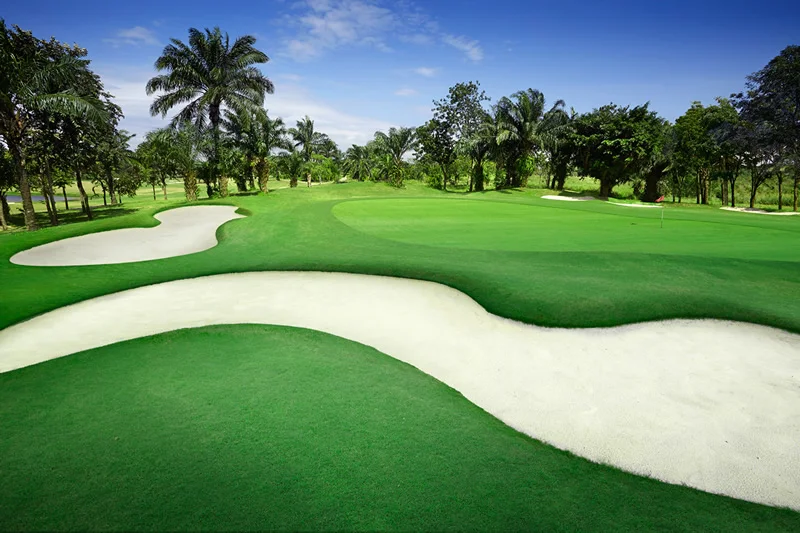
Hua Hin, Thailand’s original golf resort destination about three hours south of Bangkok, offers 12+ courses ranging from championship layouts to charming traditional Thai golf.
This region holds special significance because it’s Thailand’s oldest golf resort area, with courses dating back to the 1920s when Thai royalty established Hua Hin as their preferred beach escape. That heritage still permeates the golf—Royal Hua Hin Golf Club (established 1924) is Thailand’s oldest course and feels like stepping into golf history.
Modern additions like Black Mountain Golf Club and Banyan Golf Club have elevated Hua Hin to genuine championship standards while courses like Springfield Royal Country Club and Sea Pines deliver excellent resort golf at reasonable prices.
Hua Hin’s advantage is its relaxed beach resort vibe combined with easy Bangkok access it’s popular with Thai golfers doing weekend trips and international tourists who want beach, golf, and seafood without Pattaya’s more aggressive party atmosphere.
Chiang Mai: 12+ Courses (Mountain Golf Paradise)
Chiang Mai and northern Thailand offer 12+ courses with a completely different character from southern Thailand’s coastal golf. Up here, you’re playing mountain courses surrounded by jungle and cooler temperatures (relatively speaking—it’s still Thailand).
Alpine Golf Resort Chiang Mai, Summit Green Valley, Royal Chiang Mai Golf Club—these courses utilize elevation changes, mountain backdrops, and lush vegetation to create memorable golf that feels distinct from the flatter Bangkok/Pattaya courses.
Chiang Mai golf works brilliantly if you’re also interested in northern Thailand’s cultural attractions (temples, night markets, hill tribes, elephant sanctuaries) or if you’re visiting during Thailand’s hot season (March-May) when Chiang Mai’s slightly cooler climate makes golf more comfortable.
The golf here is generally more affordable than Bangkok or Pattaya—$70-120 covers most courses—and you’ll encounter fewer international tourists, giving it a more authentically Thai feel.
Phuket and Phang Nga: ~10 Courses (Island Golf Premium)
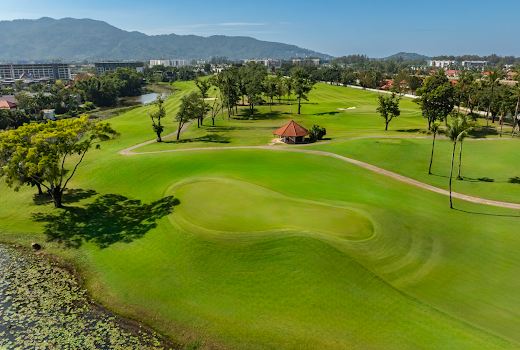
Phuket and neighboring Phang Nga province host approximately 10 golf courses, headlined by Thailand’s most famous golf club: Blue Canyon Country Club.
Blue Canyon’s two courses (Canyon and Lakes) have hosted multiple Asian Tour events and remain Thailand’s most internationally recognized golf facilities. Laguna Golf Phuket, Red Mountain Golf Club, and Loch Palm round out Phuket’s excellent course selection.
Phuket golf tends to be pricier than elsewhere in Thailand—$150-200+ is common at premium courses—but you’re also getting resort island convenience where you can literally go from beach to golf course to spa to sunset dinner without ever needing extensive transportation.
The island setting means tropical beauty is cranked up to eleven—you’re playing golf surrounded by Andaman Sea views, limestone karsts, and lush jungle that makes every hole Instagram-worthy.
Beyond the Big Five: Thailand’s Other Golf Regions
While Bangkok, Pattaya, Hua Hin, Chiang Mai, and Phuket dominate golf tourism, Thailand has courses scattered throughout the country:
Pattaya’s northern neighbor, Khao Yai, has excellent courses like Bonanza Golf Club set in mountainous wine country. Kanchanaburi west of Bangkok offers courses near the famous Bridge on the River Kwai. Southern beach destinations like Krabi and Koh Samui have limited but growing golf options. Northeastern Thailand (Isaan) has courses primarily serving local Thai golfers rather than international tourists.
The total of approximately 250 courses across Thailand includes these diverse regions, though again, the ~150 courses genuinely set up for international golf tourism are concentrated in the major areas discussed above.
What Makes Thailand Golf Still Extraordinary (Despite Vietnam’s Recent Buzz)
Look, I get it—Vietnam has been the hot story in Southeast Asian golf the past couple years. Tiger Woods designing his first Vietnamese course, explosive tourism growth, six consecutive “Asia’s Best Golf Destination” awards, new courses opening constantly. Vietnam’s the new exciting thing, and rightfully so.
But here’s the reality: Thailand remains the benchmark that every other golf destination in the region measures itself against. And there are specific reasons why experienced golfers who’ve played both Vietnam and Thailand often prefer the Thai experience.
Thai golf caddies are legendary for good reason. These aren’t just people carrying your bag; they’re skilled professionals who’ve often worked the same course for years or decades. They know every break on every green, they understand how the wind affects each hole throughout the day, and somehow they develop an almost telepathic sense of what club you need before you’ve even looked at the yardage.
More than technical skill, though, it’s the attitude. Thai caddies embody that famous Thai hospitality—they’re encouraging when you hit a good shot, sympathetic when you don’t, and they manage to keep your spirits up even when you’re playing terribly without ever feeling insincere. I’ve played golf courses around the world, and no country comes close to Thailand’s caddie culture.
Vietnam’s caddies are improving rapidly, but they don’t yet have the decades of ingrained professional culture that makes Thai caddies special. That difference matters more than you’d think.
This might sound frivolous, but hear me out: golf trips involve a lot of meals, and Thailand’s food scene makes every single meal an event. Post-round pad thai at the clubhouse that’s somehow better than anything you’ve had at home. Night market street food that costs $2 and tastes better than $50 restaurant meals in Western countries. Resort restaurants serving royal Thai cuisine that reminds you why Thai food is globally beloved.
Golf trips aren’t just about golf; they’re about the complete experience. Thailand’s food culture—accessible, diverse, incredibly delicious, and absurdly affordable—elevates every golf trip into something more than just “we played some nice courses.”
“Land of Smiles” is Thailand’s tourism slogan, and you might assume it’s just marketing. But spend any time golfing in Thailand and you realize it’s genuinely cultural. From the staff at your hotel to the caddie master at the golf course to the person serving you lunch to random Thai golfers you get paired with—there’s a warmth and friendliness that makes you feel welcome in a way that’s hard to quantify but impossible to miss.
This isn’t to say Vietnamese or Malaysian or other Southeast Asian people aren’t friendly—they absolutely are. But Thailand has built its entire tourism industry around hospitality for decades, and that deep cultural experience shows in countless small interactions throughout a golf trip.
Yes, Thailand is more expensive than Cambodia or even Vietnam for golf. Bangkok or Pattaya championship courses run $120-180 compared to Vietnam’s $100-140 range. But compare that to:
Thailand delivers championship courses designed by major architects, immaculate conditioning, professional caddies, and resort amenities at prices that make Western golf look laughably overpriced. Yes, you can save $20-30 per round in Vietnam, but you’re still getting extraordinary value compared to developed Western golf markets.
Factor in cheaper accommodation ($40-80/night gets you excellent hotels in Thailand), cheap food ($5-15 per meal), affordable transportation, and you realize an entire Thailand golf trip costs what just the green fees alone would be for equivalent golf in Australia or Europe.
Here’s an interesting observation: Thailand’s golf course development has noticeably slowed over the past 5-7 years. Unlike Vietnam which is adding 10-15 courses annually right now, or China’s previous golf boom, Thailand seems to have settled into steady state rather than aggressive expansion.
Some interpret this as stagnation or Thailand “losing” to Vietnam. I think that’s misreading the situation. Thailand has mature golf infrastructure—250 courses for a country of 70 million people is already strong penetration. The focus has shifted from building more courses to improving existing ones, hosting more international tournaments, and marketing Thailand golf more effectively to global audiences.
You can see this in several developments:
Tournament hosting has increased significantly. The PGA Tour’s Thailand Golf Championship at Siam Country Club brings global attention. The Thailand Classic on the Asian Tour is a regular stop. The Legends Tour has visited Thailand. These tournaments showcase Thai courses to worldwide golf audiences in ways that simply opening another new course wouldn’t.
Course renovations and upgrades are happening constantly. Rather than building new courses, operators are investing in improving existing facilities—new clubhouses, better practice areas, course redesigns, conditioning improvements. Black Mountain’s recent upgrades, Siam Country Club’s ongoing course refinements, Bangkok courses improving drainage and turf—these investments matter even if they don’t generate headlines like “new Tiger Woods course opens.”
Government tourism initiatives are ramping up. The Tourism Authority of Thailand (TAT) has been increasingly active in golf tourism marketing, recognizing that golf tourists are high-value visitors who stay longer and spend more than average tourists. You’re seeing coordinated marketing campaigns targeting Korean, Japanese, Chinese, Middle Eastern, and Western golf tourists.
So Thailand’s not stalling—it’s maturing. Vietnam is in explosive growth phase (which is exciting!). Thailand is in optimization phase (which is actually more beneficial for golf tourists since you’re getting refined, proven experiences rather than brand-new courses still working out kinks).
This is the question I get asked constantly, so let me address it directly: Why not both?
Seriously, Thailand and Vietnam work brilliantly as a combined trip. Fly into Bangkok, play 3-4 days of golf around Bangkok/Pattaya, hop over to Da Nang or Hanoi for 3-4 days of Vietnam golf, then either fly home or loop back through Bangkok. You get Thailand’s mature infrastructure and legendary hospitality plus Vietnam’s exciting new courses and explosive growth energy.
But if you’re forced to choose one:
Choose Thailand if: you prioritize professional service and proven experiences over discovering something new; you want the widest variety of course options and price points; you value that complete cultural experience (food, temples, people) as much as the golf itself; you’re a first-time Southeast Asia visitor who wants the safest, most reliable introduction to the region; or you’re traveling with non-golfers who want excellent tourist infrastructure while you play.
Choose Vietnam if: you want to feel like you’re getting in early on something exciting; you prioritize newer courses and recent designs; you’re specifically attracted to Vietnam’s cultural and historical sites (Hanoi, Hoi An, Halong Bay) beyond just golf; you want slightly cheaper golf (though the gap is narrowing); or you’ve already played Thailand extensively and want somewhere fresh.
Honestly, though? You should experience both. Thailand and Vietnam represent two different stages of golf destination development, and both offer experiences you can’t get elsewhere. Thailand gives you refined excellence; Vietnam gives you exciting emergence. Combined, they show you the full spectrum of what Southeast Asian golf can be.
Best time: November through February is peak season—dry, cooler temperatures (relatively), perfect conditions. March through May is hot (95°F+ / 35°C+) but courses are less crowded and rates drop. June through October is monsoon season with afternoon rains but surprisingly playable, lowest rates, and almost empty courses.
How many courses to play: I’d suggest 3-5 rounds over a week gives you proper Thailand golf experience without burning out. Play a mix—one ultra-premium course (Siam Country Club, Thai Country Club), a couple solid mid-range courses, maybe one budget option for comparison.
Where to base yourself: Bangkok if you want variety and city energy; Pattaya if you want beach resort atmosphere and highest course concentration; Hua Hin for relaxed beach golf; Chiang Mai for mountain golf and northern culture; Phuket if you want island luxury and don’t mind premium pricing.
Budget realistically: Figure $120-150 per round at good courses (green fee + caddie + cart), $25-35 per round for caddie tips, $50-100/night for hotels, $30-50/day for food, plus transportation. A week-long Thailand golf trip (5 rounds, 7 nights) runs roughly $1,500-2,500 USD depending on accommodation choices and course selections—still excellent value for what you’re getting.
Thailand’s golf infrastructure is mature and tourist-friendly, which means you absolutely can DIY your trip—book courses directly, arrange your own hotels, figure out transportation. Many people do exactly that successfully.
But if you want someone who knows which Bangkok courses drain best during monsoon season, which Pattaya courses offer best value, how to time your tee times to avoid traffic, and can handle all the logistics while you just show up and play? That’s where golf travel specialists like Asia Golf Journey prove their worth.
They handle Thailand bookings alongside Vietnam, Cambodia, Malaysia—the whole Southeast Asia golf picture—so if you’re doing that multi-country trip I mentioned, they coordinate everything. They’ve got established relationships with courses that can sometimes mean preferential rates or easier booking at busy times. And they understand what international golfers actually want versus what tourism brochures promise.
📧 Email: creative@asiagolfjourney.com
📞 Phone: +84 982 117 466
🌐 Website: www.asiagolfjourney.com
The Bottom Line on Thailand Golf
Thailand has approximately 250 golf courses spread across the kingdom, with 150+ genuinely suitable for international golf tourists. The major golf regions—Bangkok (50+ courses), Pattaya (~30), Hua Hin (12+), Chiang Mai (12+), and Phuket/Phang Nga (~10)—offer everything from budget-friendly golf to ultra-premium championship courses.
While Vietnam has grabbed recent headlines with explosive development, Thailand remains Southeast Asia’s golf standard-bearer for good reason: legendary caddie service, incredible food, genuine hospitality, mature infrastructure, and value that makes Western golf destinations look outrageously expensive.
Thailand’s not building courses at Vietnam’s pace anymore, but it doesn’t need to—the optimization and refinement of existing courses, increased tournament hosting, and government tourism push suggest a destination that knows its strengths and is doubling down on excellence rather than just expansion.
If you’re serious about golf and haven’t played Thailand yet, what are you waiting for? This is the experience that every other Southeast Asian golf destination is trying to replicate. Get to the original.