The Open Championship is the oldest major tournament in the world of golf, but its appeal doesn’t just come from its more than 160-year history. Behind every edition sits a carefully engineered marketing strategy, one where brand storytelling, fan experience, and commercial value are all built in lockstep.
For golf course managers, The Open is more than a tournament to watch, it’s a case study in brand-building, customer-experience design, and competitive positioning. Here are four standout marketing plays from this year’s Open that any golf facility can adapt.
1. Sell the Heritage, Not Just Focusing on Golf
The first thing that sets The Open apart is that it isn’t selling a sporting event, it’s telling about legacy.
On its official site, The Open leans hard on a single line: “Golf’s Original Championship.” Rather than leading with prize money, technology, or star names, most of the content orbits around 160-plus years of history, the iconic Claret Jug, and the Open Rota, which is the rotation of links courses that have shaped the sport’s story.
Royal Birkdale, host of the 154th Open, is a clean example. Instead of framing itself as simply “this year’s venue,” The Open’s site invests heavily in the course’s backstory: its previous Open years, the champions crowned there, and its place in the championship’s broader history. That narrative runs through the website, video content, social channels, and official publications alike, meaning that it isn’t a one-off feature, it’s a thread stitched through everything.
The payoff: fans don’t feel like they’re watching a golf tournament. They feel like they’re stepping into a piece of the sport’s history. That’s brand storytelling doing its job. Rather than parking heritage in an “About Us” section, The Open treats it as a brand asset and works it into every piece of communication.
Course managers can start with the same questions The Open effectively answers for itself:
- Why was this course built, and by whom?
- What was the designer’s philosophy?
- Is there a signature hole with a story behind it?
- What tournaments has the course hosted?
- What makes this a destination worth remembering, not just playing?
2. Turn a Tournament Into a Multi-Day Experience
Look only at the tee sheet and you’d think The Open is a four-day event (16–19 July 2026). In reality, the fan experience starts well before the first tee shot. The Open builds nearly a full week of programming around the championship, turning it into a genuine golf festival.
At the 154th Open, fans can engage with the event long before round one, through:
- Practice Days: close-up access to players warming up.
- Heroes Classic: an exhibition event bringing together legends and current stars to build atmosphere ahead of the main draw.
- Final Qualifying: the last chance for players to earn a spot in the field, generating fresh storylines right up to the opening round.
- Fan Village: an activation zone with interactive games, retail, and entertainment.
- Kids Go Free: family-focused programming that widens the event’s appeal beyond golfers alone.
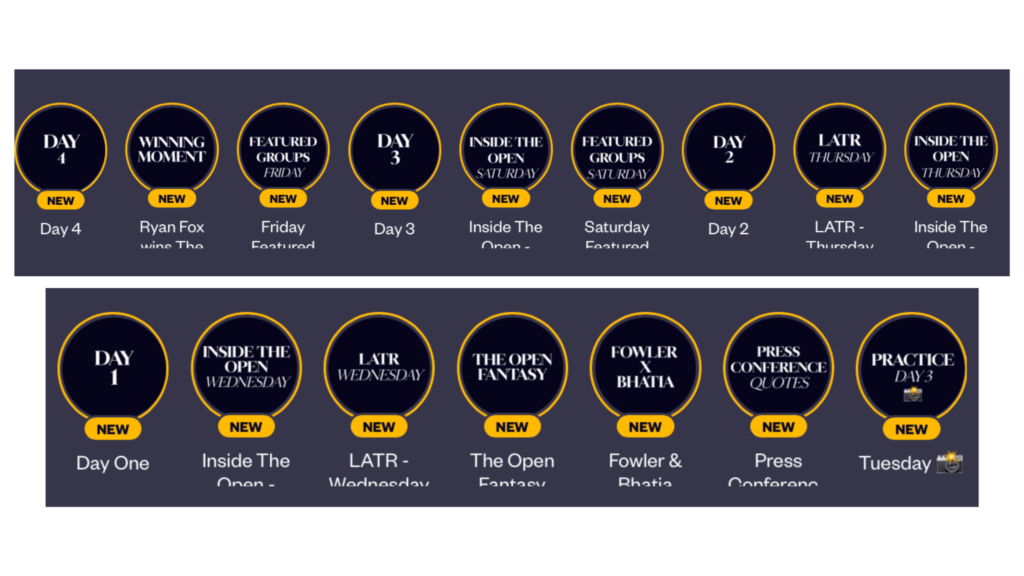
Activities throughout the 154th edition of The Open (in order from right to left)
None of this changes the competitive product on the course. But it gives fans more reasons to arrive early and stay longer and that shift has real commercial consequences. Fans tend to:
- Spend more time on-site.
- Spend more on food, retail, and merchandise.
- Generate more social content.
- Remember The Open as a complete experience, not just a golf tournament.
Course operators can apply the same logic without waiting for a major championship. Consider building around:
- A practice day or Pro-Am ahead of a tournament.
- Post-round networking or social events.
- Sponsor activation zones.
- Evening dining, live music, or entertainment programming.
These additions don’t just create incremental revenue beyond green fees, they pull in people who’ve never picked up a club, expanding the customer base and repositioning the course as a destination rather than a facility.
3. Every Ticket Tier Is a Different Experience
The Open doesn’t sell one product to everyone, it sells access and in layers.
Beyond the Ticket Ballot (the standard route to entry, via a One Club account and random draw), fans can choose from Ticket Plus (an upgraded general-admission tier), Hospitality (full VIP packages), Tickets & Camping, and full Ticket Packages that bundle accommodation and travel. The takeaway: The 154th Open isn’t selling “entry”, it’s selling a menu of experiences calibrated to different budgets and expectations.
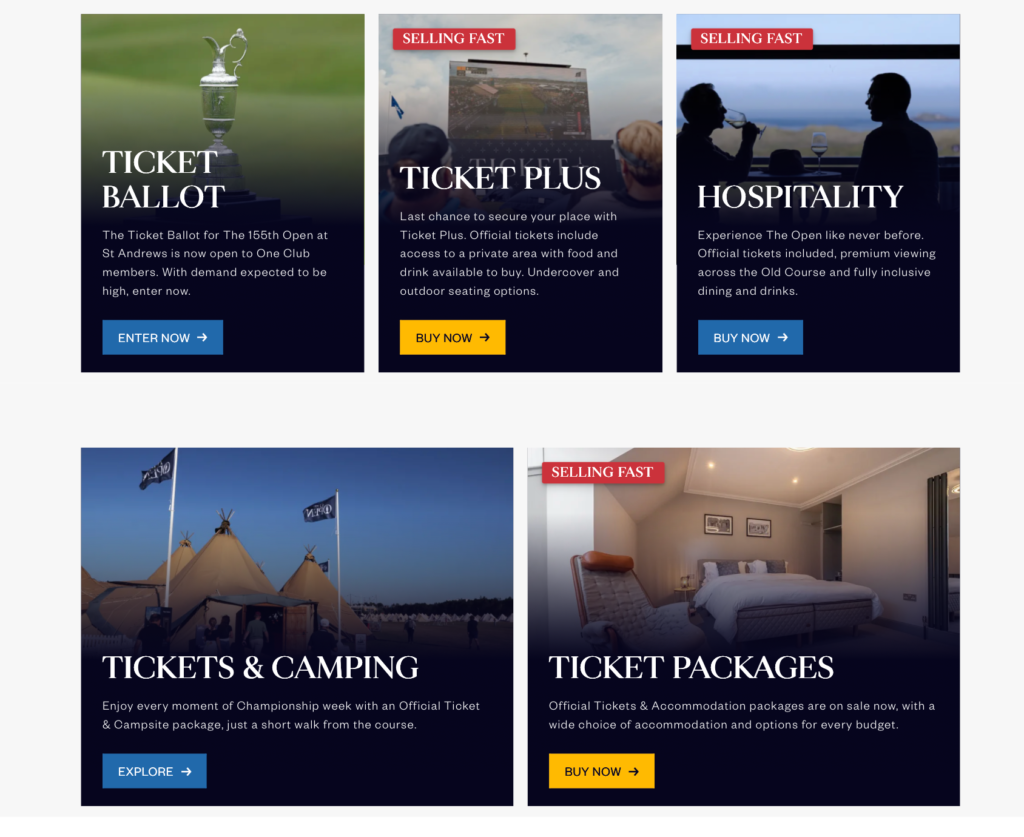
Different ticket tiers were sold for the 154th edition of The Open.
The lesson for course managers is simple: Stop selling “the right to play” and start selling “the right to experience.” A guest who pays more isn’t just expecting better service, they’re expecting to feel treated differently. That could mean a dedicated check-in area, a private lounge, access to a special guest, a behind-the-scenes tour, priority booking, or perks that standard guests simply don’t get.
4. Build a Premium Experience Into Every Touchpoint
A premium experience isn’t the product of one great course or one well-run tournament. It’s the sum of dozens of touchpoints, designed consistently across the entire guest journey.
At the 154th Open, that journey starts the moment a fan visits the website to research the event, buy tickets, or plan their trip. From there it extends through the mobile app, on-site wayfinding, volunteer staff, premium hospitality zones, the official merchandise shop, the Fan Village, and every other service layer, all operating to the same brand standard.
Ticket Plus is a good illustration: holders don’t just get a ticket, they get a private rest area, dedicated dining, a bar, live-scoring screens, and additional amenities. It’s exactly these details that separate “attending a tournament” from “experiencing a brand.”
Course managers can run the same audit on their own operation by asking:
- Is the website easy to use and genuinely informative?
- Is the booking process frictionless?
- Is on-site signage clear and consistent?
- Do the restaurant, pro shop, and locker rooms reflect a unified brand identity?
- Does staff deliver a consistent, professional experience at every interaction?
These details, small as they may seem, are what ultimately shape how guests judge service quality and whether they come back.
Asia Golf Journey – Helping Golf Courses Build Marketing Strategies That Last
Asia Golf Journey believes a successful golf course isn’t defined by facilities alone, it needs a clear brand strategy and a level of experiential differentiation strong enough to keep guests coming back.
Through marketing strategy, brand building, digital communications, content production, and customer experience design, we partner with golf courses and golf resorts to grow brand awareness, attract the right guests, and build sustainable growth in an evolving golf market.
📧 Email: creative@asiagolfjourney.com
📞 Hotline: +84 982 117 466
The Leading Strategic Partner for Golf, Sports & Hospitality in Vietnam
(Source reference: The Open official website)