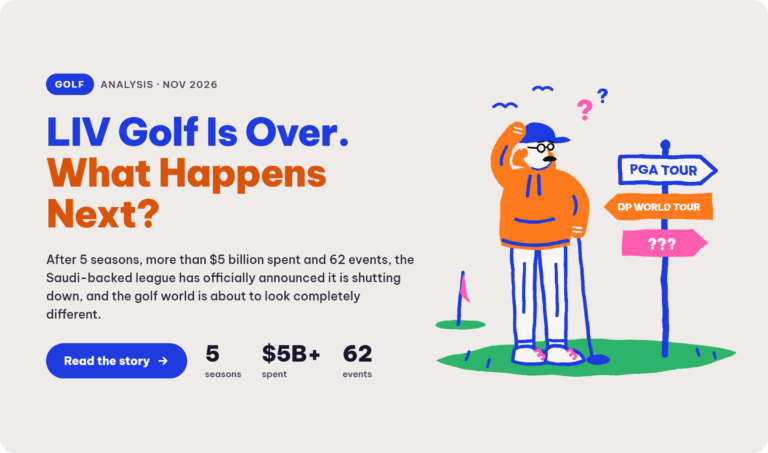
After five seasons, $5 billion spent, and 62 tournaments, the Saudi-backed breakaway league announced it will wind down operations and the global golf landscape is about to look very different.
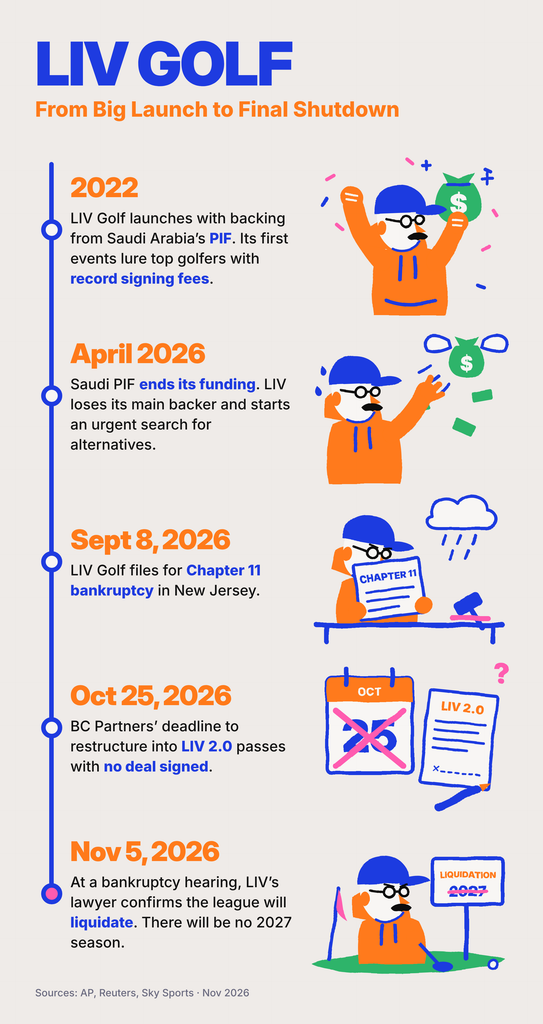
On November 5, 2026, in a bankruptcy court in Trenton, New Jersey, a lawyer stood up and said three words that ended four years of the most disruptive chapter in professional golf history: LIV Golf would wind down.
No LIV 2.0. No restructured league. No 2027 season. The Saudi-backed breakaway circuit that launched in 2022 with $500 million signing bonuses, 54-hole shotgun-start formats, and an explicit ambition to reshape professional golf, was over.

How It Ended
LIV Golf filed for Chapter 11 bankruptcy on September 8, 2026. The filing came after its primary backer, Saudi Arabia’s Public Investment Fund, withdrew financial support in April, citing a change in investment strategy. Without the PIF’s backing, LIV could not sustain operations or secure alternative funding.
BC Partners, a private equity firm, stepped in with a pledge of $300 million to restructure the league into “LIV 2.0.” But the deal required player commitments and financial agreements that couldn’t be reached before the extended deadline of October 25. BC Partners publicly stated it was “disappointed” the terms could not be agreed.
Where the Players Go
The most immediate question is what happens to the roughly 50 players who built their recent careers around LIV and who, in many cases, gave up PGA Tour and DP World Tour memberships to join.
Some have already found their path. Jon Rahm, who reportedly gave up claims worth around $100 million to exit his LIV contract early, won the Abu Dhabi Championship on the DP World Tour last week, his first competitive start since leaving LIV. Patrick Reed, who left LIV in January without renewing his contract, earned a PGA Tour card through the DP World Tour and plans to compete on both circuits in 2027. Brooks Koepka was the first former LIV player to return to the PGA Tour, paying financial penalties to do so.
“It would be a great outcome if LIV’s top players had to qualify through the DP World Tour for a handful of PGA Tour Championship Series cards. That’s the right scenario.”- Rory McIlroy said.
Others face more uncertainty. Bryson DeChambeau has a membership offer based on his 2024 U.S. Open win that he must accept by mid-November. Dustin Johnson and Joaquin Niemann may receive tournament invitations under a new DP World Tour policy for players left in limbo. Sergio Garcia is expected to return via a Legends career-money exemption. Lee Westwood, Ian Poulter, and Louis Oosthuizen may follow the same route.
The DP World Tour’s Unexpected Windfall
Whatever the long-term verdict on LIV Golf, its collapse has delivered an unexpected benefit to the DP World Tour. Eight former LIV players competed at this week’s DP World Tour Championship in Dubai. Three of them: Eugenio Chacarra, Patrick Reed, and Jon Rahm are in contention for the Race to Dubai title. Chacarra, with three wins this season, leads the standings.
What This Means for the Golf Industry
LIV Golf’s five-year run leaves behind a complicated legacy. It demonstrably raised player compensation across all major tours, the arms race it triggered forced the PGA Tour and DP World Tour to increase prize funds significantly. It introduced a format (shotgun starts, 54 holes, team structure) that the broader industry largely rejected but that generated real audience debate. And it showed that even unlimited Saudi money cannot easily displace a sport’s established institutions.
What it did not do was build a sustainable ecosystem. Without a qualifying pathway, without broadcast deals that generated genuine viewership, and without the prize of Ryder Cup eligibility for European players, LIV remained a gilded sideshow well-paid but peripheral to the events that actually determined professional golf’s hierarchy.
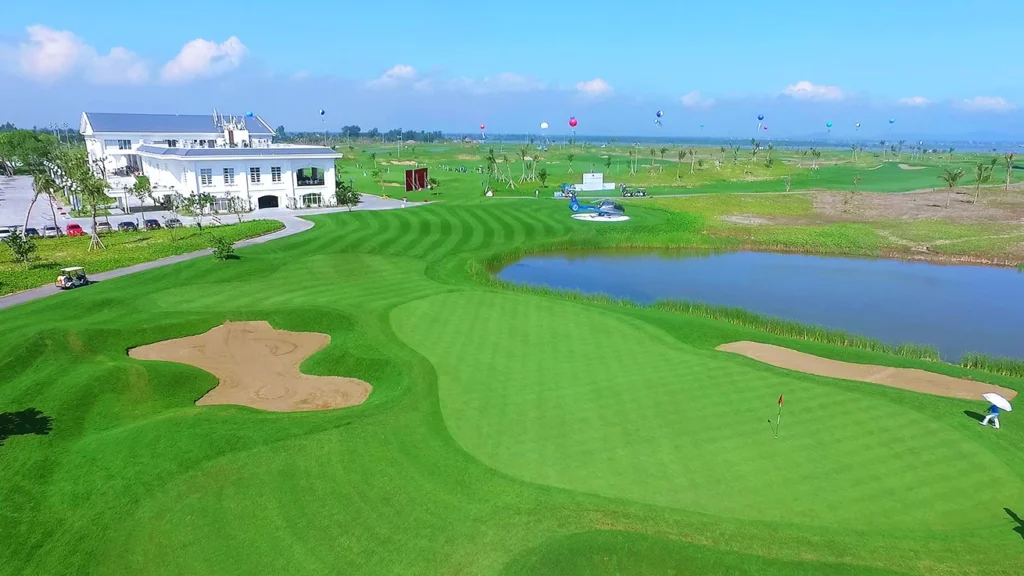
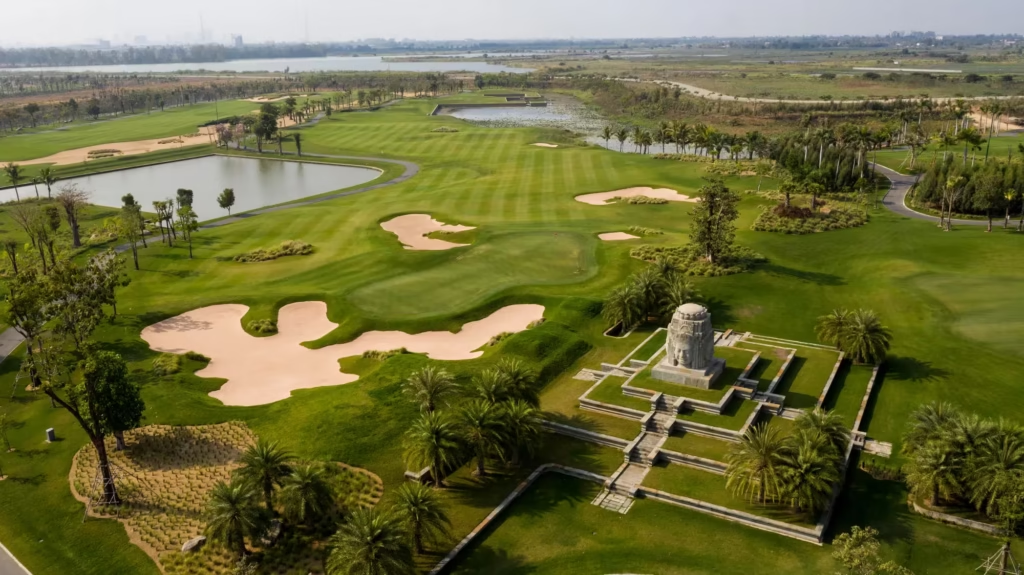
For courses and operators in Asia, the more practical question is how the return of marquee names to the mainstream tours affects the premium golf travel market. Players like Rahm, Hatton, and Meronk back on the DP World Tour strengthen a circuit that already runs events across Southeast Asia and India, which is good news for the region’s growing aspiration to host major international events.
LIV Golf proved one thing clearly: professional golfers, like most elite athletes, will follow the money. What it failed to prove is that money alone can build a league. The PGA Tour and DP World Tour survived not because they outspent LIV, but because they owned the credentials that actually mattered to players, ranking points, Ryder Cup eligibility, Major qualification pathways, and four decades of fan relationships.
The end of LIV does not mean a return to the pre-2022 status quo. The sport has changed: prize funds are higher, the conversation about player power is louder, and the question of how professional golf is governed has been permanently opened. For operators and investors in golf across Asia, the period ahead, with top-tier fields reassembled on the mainstream tours, may actually represent one of the strongest commercial windows the industry has seen in years.
Sources: GOLF.com (Josh Schrock, November 11, 2026); ClickOrlando / AP (November 5, 2026); Chicago Sun-Times (November 5, 2026). © 2026 Asia Golf Journey.