Record international visitor numbers. Tee sheets filling fast. But behind the growth figures, golf course operations teams are facing a set of challenges that no spreadsheet fully captures.
Vietnam is entering one of the most important periods of its golf year. The tourism growth numbers are compelling but behind every additional visitor is another round of golf that needs to be delivered well, another expectation that needs to be met, and more pressure on the maintenance teams, caddies, F&B staff, and tee time managers who make each day at the course work.
The context: record tourism, rising golf demand in Vietnam
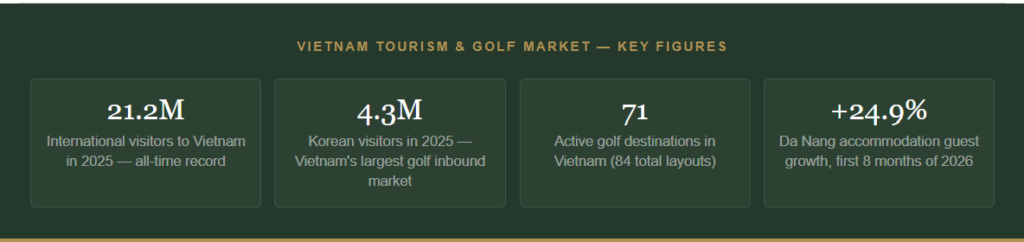
In 2025, Vietnam welcomed 21.2 million international visitors up 20.4% year-on-year and the highest figure on record, according to the General Statistics Office. While global international arrivals grew by only around 5%, Vietnam ranked among the world’s fastest-growing destinations, alongside Japan.
By source market, China led with 5.3 million arrivals (approximately 25% of total), followed by South Korea with 4.3 million accounting for 20.5% of all international visitors. These two markets are also Vietnam’s most important inbound golf sources, and their combined weight in the tourism mix has significant implications for how golf courses plan, staff, and communicate.
📍 Da Nang specifically: In the first 8 months of 2026, Da Nang recorded over 14.2 million guest nights up 24.9% on the same period last year. International guests grew 26.3%, driving accommodation and F&B revenue to nearly VND 46,932 billion. As Vietnam’s most important golf corridor, these numbers translate directly into tee sheet pressure across the Da Nang cluster’s courses.
On the golf supply side, Asia Golf Journey’s latest research counts 84 active layouts across 71 named golf destinations nationwide 68 standard 18-hole and 16 extended 27-hole courses. Five projects are currently under construction, adding a further 144 holes in the next two to three years. The market is growing. So is the competition for the golfer’s round.
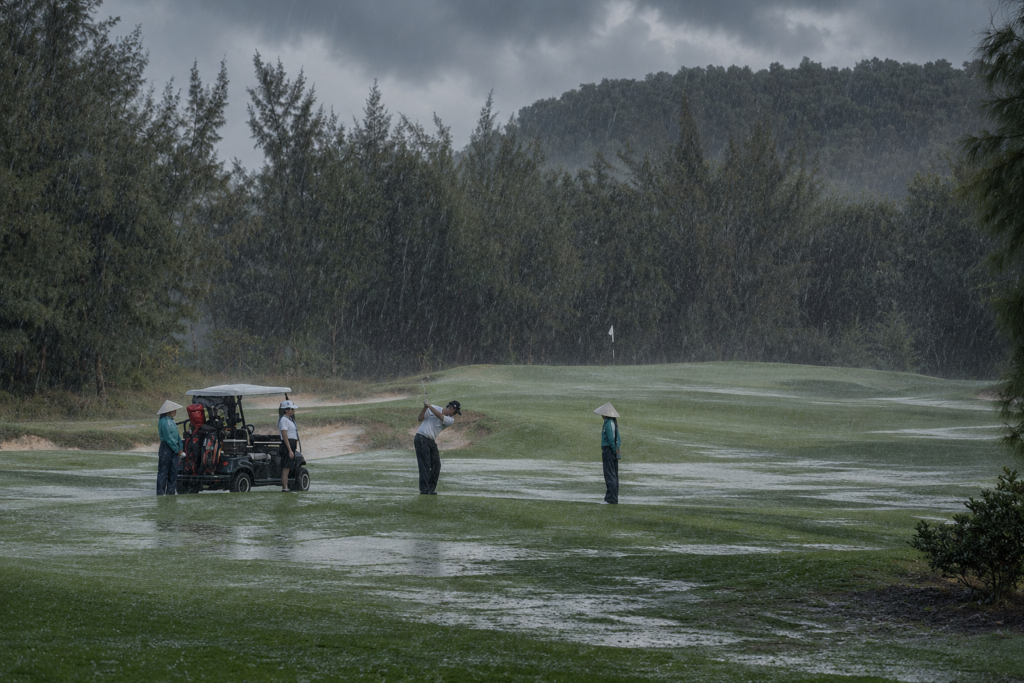
More golfers. More rounds. Higher expectations. And less margin for operational error.
5 real operational challenges this peak season for Vietnam Golf Courses in the coming high season
1. Course conditions after heavy rain
Heavy rainfall can quickly affect greens, fairways, bunkers, and drainage systems. Keeping the course in a playable state while maintaining quality standards becomes a daily equation for the maintenance team, particularly at Central Vietnam courses where complex terrain and concentrated rainfall from October to December create recurring pressure on drainage infrastructure.
2. Recovery time is shrinking
After significant rainfall, a course needs time to recover and the maintenance team needs time to prepare surfaces for the next round of play. During peak season, when tee times are near capacity and every hour of operation matters, finding enough recovery time without sacrificing the schedule is a genuine management challenge that has no easy answer.
3. Tee time management under weather disruption
More golfers means a denser tee sheet. Add weather delays, late cancellations, and last-minute changes, and operations teams are constantly balancing course capacity against golfer experience. Without real-time tee sheet management and clear internal protocols for delay and cancellation scenarios, this pressure compounds quickly across a busy day.
4. Staffing and consistent service quality
Peak season means more caddie demand, higher F&B transaction volume, more transport requests, and more guest-facing interactions at every touchpoint. Maintaining consistent service quality across all of them — from check-in at the pro shop to the 18th hole — is a people management challenge that requires well-documented operating procedures, not just more headcount.
5. International golfer expectations
Many Korean, Japanese, and Chinese golfers visiting Vietnam have invested significant time and money into their trip. Weather disruptions are understandable — but how a course communicates and handles the situation can meaningfully affect the overall experience and the review that follows. A course without real-time condition updates or delay communications in Korean or English creates a service gap that is entirely avoidable.
What this peak season is really telling Vietnam’s golf industry
Tourism growth is a genuine opportunity but it is also a test of each course’s operational capability. Courses that can maintain consistent service quality through peak season, manage tee time disruptions effectively, and communicate well with international guests will build compounding advantages over time: better reviews, higher return visit rates, and stronger positioning on international OTA and booking platforms.
The courses that are not prepared will feel the pressure most acutely not through short-term revenue numbers, but through the negative reviews, non-returning guests, and missed partnership opportunities that follow a peak season handled poorly.
4 questions every Vietnam golf course operator should be asking right now
- Do we have a clear tee time delay and cancellation protocol with a named person responsible for each decision?
- Can golfers access real-time course condition updates before they arrive or do they only find out on arrival?
- Do we have weather communication templates in Korean and English ready to send?
- When caddie and F&B demand spikes unexpectedly, do we have a staffing contingency plan in place?
Asia Golf Journey – Supporting Vietnam’s Golf Courses
We work with golf courses and resorts across Vietnam and Southeast Asia on marketing, operations strategy, and international market development.
Data sources: General Statistics Office of Vietnam (GSO), Vietnam National Authority of Tourism (VNAT), Vietnam News Agency (VNA), Da Nang Department of Tourism. Golf market data: Asia Golf Journey Research, July 2026. All figures verified from official sources prior to publication.