March 7 summit identifies tax burden as key obstacle to Vietnam’s golf tourism ambitions as sector targets $10 billion annual revenue by 2040
Vietnam’s golf industry reached a critical turning point on March 7, 2026, when key stakeholders gathered to address fundamental challenges hindering the sector’s growth potential. The Vietnam Golf Association (VGA) hosted a strategic forum titled “Removing Bottlenecks – Elevating Vietnamese Golf,” bringing together government officials, economic experts, golf course investors, and sports industry leaders to chart a new direction for Vietnam golf.
Vietnam is targeting approximately 8% GDP growth with ambitions for double-digit growth in the coming decade. Within this economic framework, tourism has emerged as one of the fastest-growing sectors at approximately 21% annual growth, targeting revenue of around VND 1 quadrillion (approximately $40 billion USD).
Golf occupies an increasingly important position within this tourism ecosystem. Currently contributing around $600 million annually, the sector reached $1 billion in revenue in 2025 a milestone demonstrating golf’s evolution from niche sport to significant economic driver.
Looking ahead, golf is set to play a significant role in Vietnam’s broader sports economy, which is projected to scale up to $10 billion by 2040. Golf tourism attracts high-spending international visitors, creates employment across multiple sectors, and enhances Vietnam’s destination brand globally.
The Five Strategic Bottlenecks
Forum participants identified and reached consensus on five strategic bottlenecks currently limiting Vietnamese golf development:
1. High Tax Burden: The Primary Obstacle
Golf services currently face 20% special consumption tax plus 10% VAT, creating one of the highest tax burdens in the region. This tax structure makes Vietnam golf significantly less competitive compared to Thailand, South Korea, and Malaysia countries that recognize golf as a strategic tourism-economic sector rather than a luxury activity requiring punitive taxation.
Details Southeast Asia Golf Taxes: https://asiagolfjourney.com/detailed-golf-taxes-in-southeast-asia/
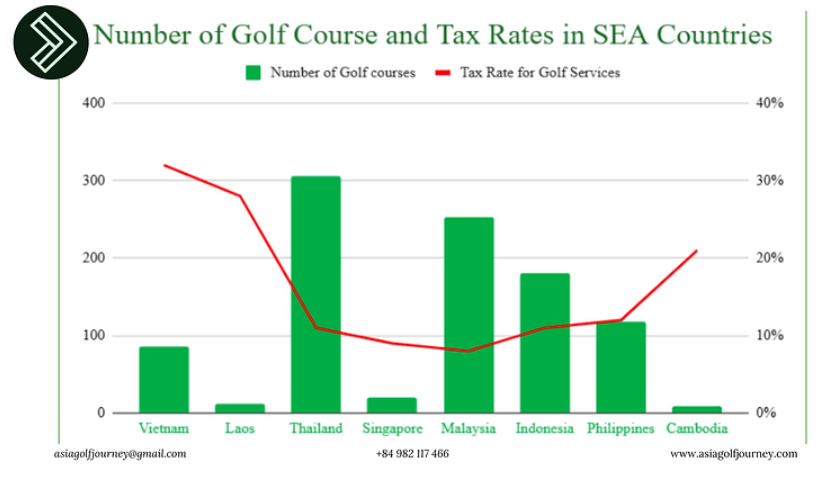
Competitive disadvantage: For example, a golfer paying $100 for green fees in Vietnam effectively pays $130 after taxes. In Thailand, the same golfer might pay $110-120 total. This 10-20% price gap directly impacts Vietnam’s ability to attract international golf tourists who compare regional options.
The 20% special consumption tax classifies golf alongside gambling, luxury goods, and harmful products – a categorization that doesn’t reflect golf’s reality as a sports tourism activity generating substantial economic benefits.
2. Complex Legal and Investment Procedures
Golf projects must navigate multiple procedural layers related to land, environment, investment, fire safety, and design approval. These lengthy processes increase capital costs and project timelines, forcing investors to reconsider project viability.
3. Limited Industry Coordination and National Branding
Currently, most golf courses operate independently without a unified national mechanism for promotion, workforce training, or building the “Vietnam Golf” brand in international markets. This fragmentation results in high individual operating costs and limited collective competitive strength.
Consequence: Vietnam lacks a unified golf destination brand like “Thailand Golf Paradise” or “Malaysia, Truly Asia.” Each course markets independently, unable to leverage collective resources for international promotion or standardized service quality.
4. Social Perception and Golf Accessibility
For many years, golf has been perceived as a luxury sport, creating a large gap between golf and the community, especially young people . Without expanding the player base, the domestic market cannot grow large enough to provide sustainable long-term growth momentum.
Challenge: Vietnam’s emerging middle class represents enormous potential demand, but perception barriers prevent many from trying golf. Youth engagement remains low, threatening future domestic market development.
5. Capital, Governance, and Development Models
In the context of global capital increasingly demanding transparency and high governance standards, investors expect the golf sector to meet ESG standards on environment, society, and governance. This requires upgrading management standards and building sustainable development models for the entire industry.
Pressure: International investors and lending institutions now demand ESG compliance, environmental sustainability certifications, and transparent corporate governance standards many Vietnamese golf operations haven’t historically met.
Forum experts agreed that if bottlenecks are addressed comprehensively, Vietnam golf could achieve 12-15% annual growth in the coming period significantly above current growth rates and positioning Vietnam as a regional golf powerhouse.
Four Strategic Pillars for Vietnam Golf Development:
1. Policy Reform: Recognize golf as an economic-tourism sector rather than luxury consumption, prompting reconsideration of inappropriate tax structures. The proposed approach would reduce or eliminate the 20% special consumption tax, aligning Vietnam with regional competitors.
2. Transparent and Flexible Legal Framework: Streamline project approval processes, reducing timelines and costs while maintaining appropriate environmental and planning oversight.
3. Strengthen Industry Linkages: Build a unified national “Vietnam Golf” brand with sufficient international competitive strength, coordinate marketing, standardize service quality, and pool resources for workforce training.
4. Develop Green Golf Models: Implement ESG standards and digital transformation to enhance sustainability, appeal to environmentally conscious travelers, and meet international investor requirements.
Landmark Proposal: Vietnam Golf Investment Alliance (VGIA)

One of the forum’s most important outcomes was high consensus among participants on establishing the Vietnam Golf Investment Alliance (VGIA).
The alliance aims to become a strategic cooperation institution for the industry, gathering golf course investors and operators to create unity and coordination with VGA, media organizations, and government agencies. VGIA would facilitate:
- Linkages with tourism, aviation, and resort property sectors
- Policy advocacy with unified industry voice
- Development of sustainable golf economic sector strategies
- Coordination of national promotional initiatives
- Service standardization and workforce training
Five Strategic Action Commitments for Vietnam Golf
Forum participants agreed on an Action Declaration with five strategic commitments guiding Vietnam golf development:
1. Establish Vietnam Golf Investment Alliance (VGIA)
2. Advocate for special consumption tax adjustment appropriate to golf’s sports-tourism nature
3. Research and develop National Golf Strategy to 2035
4. Research and develop strategic golf tourism clusters linked with aviation, resorts, and MICE (meetings, incentives, conferences, exhibitions)
5. Research and implement ESG-oriented standards
These commitments provide a concrete roadmap for transforming Vietnam golf from its current state to a mature, internationally competitive sector.
Asia Golf Journey provides marketing services for golf courses and resort hotels targeting the evolving Vietnamese and international golf tourism markets. As Vietnam’s golf policy landscape potentially shifts, positioning and marketing strategies must adapt to new competitive realities.
📧 Email: creative@asiagolfjourney.com
📞 Phone: +84 982 117 466
🌐 Website: www.asiagolfjourney.com
Asia Golf Journey
Marketing Partner for Golf Courses and Resort Hotels in Southeast Asia
Vietnam golf stands at a crossroads. The industry has identified what needs to change. Now comes the hard work of turning strategic vision into policy reality and if successful, transforming Vietnam into Asia’s next great golf destination.
(Information Source: Sports Authority of Vietnam | Image source: Vietnam Golf Magazine)