As the FIFA World Cup 2026 unfolds across the United States, Canada, and Mexico, billions of fans around the world have tuned in match after match. But for marketers, the World Cup is more than the biggest football tournament on the planet, it’s a real-time marketing playground, where the world’s leading brands test and deliver their most creative, personalized, and rigorously measured campaigns.
What’s worth noting is that many of the lessons coming out of the World Cup aren’t reserved for sportswear or consumer goods brands alone. For golf courses, golf resorts, and golf tourism businesses, this tournament is also a timely opportunity to rethink how a destination builds its brand, attracts international travelers, and converts attention into real revenue.
To stay up to date with the latest industry insights and build a suitable marketing strategy, connect with the AGJ team at:
📞 +84 982 117 466
📧 creative@asiagolfjourney.com
1. World Cup 2026 Has Moved Beyond the Sponsor-Logo Era
Today, brands are pouring budget into activations that get fans actively engaging with the brand, not simply putting a logo on a stadium board. Adidas is a good example. Beyond supplying the official match ball, the brand has spent months rolling out storytelling videos, community campaigns, mini-games, and social content built around individual national teams.
Locally in Vietnam, Adidas also tapped into the Argentina fan community with its “Check in with the Argentina Jersey” campaign, encouraging fans to post photos and share content, generating thousands of organic interactions on Facebook rather than pushing a straightforward product ad. This is no longer advertising in the traditional sense, it’s giving customers a genuine reason to engage directly with the brand.
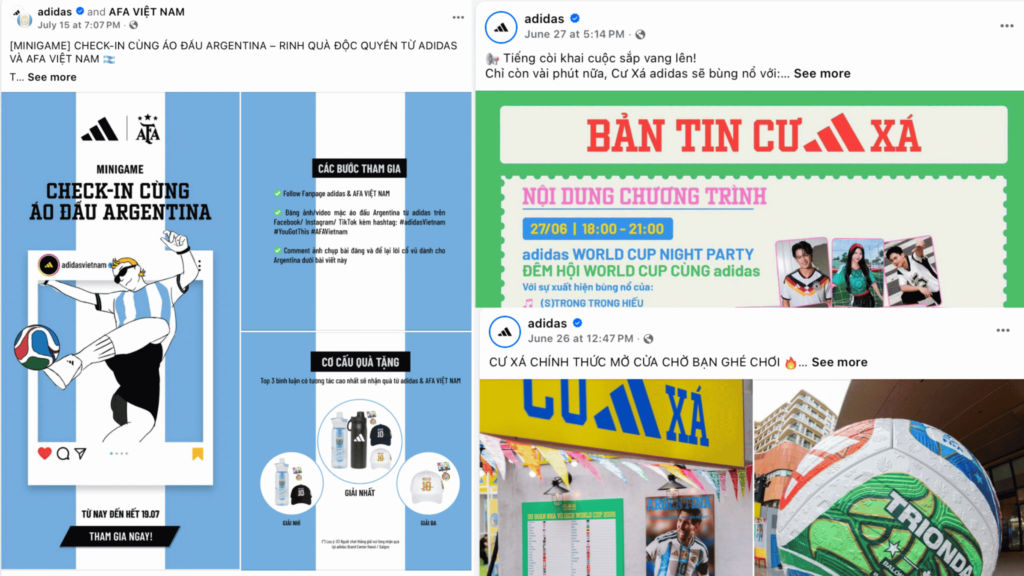
Activities for football fans in Vietnam during the 2026 World Cup organized by Adidas
(Image source: Adidas Facebook page)
For the golf industry, the takeaway isn’t to throw a World Cup-themed event at your club. The real lesson is how every single customer touchpoint can become an opportunity to deepen engagement and strengthen brand connection.
Rather than offering just a few hours on the course, many golf clubs and resorts worldwide are now investing in brand-engagement activities designed to extend the golfer’s experience before, during, and after the round. Some of the most effective formats include:
- On-course challenges: Closest to the Pin, Long Drive Challenge, Hole-in-One Challenge, or Beat the Pro events run on a regular basis to add a competitive, shareable layer beyond a standard round.
- Equipment and fitting experiences: Partnering with brands like TaylorMade, Titleist, Callaway, Ping, or XXIO to host demo days, personalized club fittings, or hands-on trials of the latest gear.
- Community-building events: Ladies’ Golf Day, Junior Golf Clinics, Member-Guest Days, Corporate Golf Leagues, or members-only tournaments that build a real golfer community and increase loyalty to the club.
- Digital experience and membership programs: Using technology to stay connected with golfers after they leave the course, which can be swing videos, round statistics, achievement certificates, loyalty points, birthday perks, or personalized email content.
2. Localized Marketing Is What Makes a Campaign Truly Resonate
One of the more interesting things about World Cup 2026 is that FIFA isn’t communicating the same way to every market. A quick scroll through FIFA World Cup’s official social channels shows the same core content adapted differently for each country, this is localized marketing in action. Vietnamese fans, for instance, regularly see posts written in Vietnamese, using language and tone that feels natural to the local football community. This reflects a much bigger trend in digital marketing today: a global strategy, executed locally, meaning that the core message stays consistent, but the way it’s told has to fit each market.
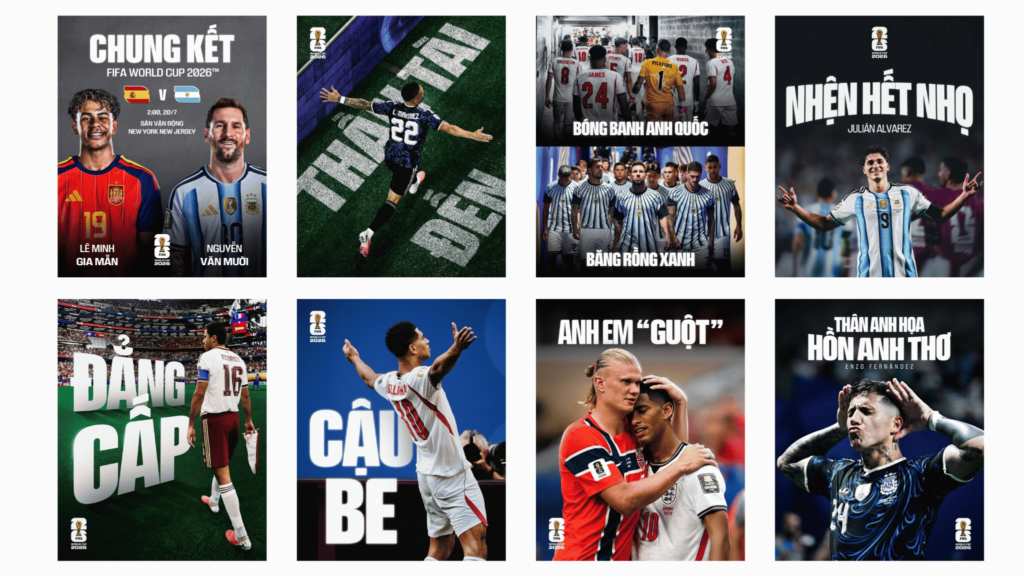
Vietnamese meme images on the FIFA World Cup Facebook fan page
Many golf course websites across Southeast Asia are still only available in English or the local language, while the number of visiting golfers from Korea, Japan, China, and Vietnam keeps growing. A website without localized content simply won’t rank as well on Google in each of those markets. In particular, local SEO today goes far beyond optimizing a Google Maps listing, it also means:
- Country-specific landing pages
- Multilingual content
- Localized pricing and payment methods
- Imagery tailored to the visual preferences of each golfer segment
3. Real-Time Marketing Keeps a Brand Part of the Conversation
Throughout the World Cup, it’s clear that official sponsors aren’t the only ones racing to capture attention. Plenty of brands outside sports have jumped into the cultural moment with content that fits their own brand identity. Nutella, Kinder, Tic Tac, and Halo Top have all rolled out football-inspired packaging or visuals. HelloFresh built content around Erling Haaland’s hairstyle using cooking ingredients, while Norwegian Airlines reshaped a plane’s nose cone into the same iconic look. None of these campaigns are trying to sell a product on the spot, they’re designed to make the brand part of a conversation that’s already happening on social media.
What’s notable is that most of these brands aren’t official FIFA partners. They’re not competing on sponsorship budget, they’re competing on speed, creativity, and their ability to plug into what consumers already care about.
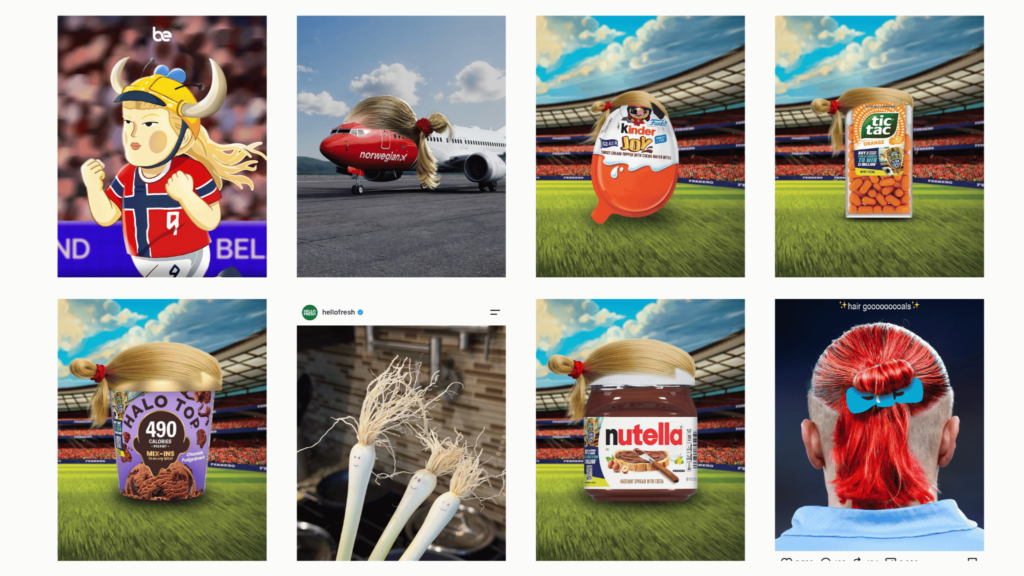
“Meme” images associated with Norwegian national team player Erling Haaland from various brands (Image source: Collected from brand channels)
For golf, the lesson isn’t to chase every trend or force humor for its own sake. But it also doesn’t mean sticking to the same fairway shots, clubhouse photos, and sunrise imagery on repeat. When the golf community is buzzing about The Masters, the Ryder Cup, a major championship, golf tourism trends, or new equipment technology, that’s exactly the moment for a brand to join the conversation with expert analysis, behind-the-scenes video, technique tips, or trend commentary that actually adds value.
The goal isn’t to “jump on trends”, it’s to show up exactly when your audience’s attention is already on a golf-related topic. That’s the essence of real-time marketing: connecting the brand to conversations already in motion, instead of waiting for customers to come looking.
4. World Cup 2026 Don’t Just Create Viewers, They Create Travel Demand
One of the standout effects of World Cup 2026 is that its impact reaches well beyond sport. As millions of fans travel between the U.S., Canada, and Mexico to follow the matches, hospitality, aviation, retail, and tourism are all seeing a major lift from the surge in international visitors.
That’s why hospitality brands started preparing campaigns well in advance. Hilton rolled out football-fan stay packages complete with match-viewing spaces, dining perks, and in-hotel experiences. Marriott Bonvoy leaned into loyalty-member promotions, while airlines and destinations built bundled products combining the sporting event with local experiences. Instead of simply selling a room or a flight, they’re selling a complete journey.
This same shift is playing out in golf. International golfers today rarely choose a destination for one famous course alone. They’re looking for a complete getaway, where golf is just one part of a bigger experience and the decision to book is shaped just as much by the quality of accommodation, dining, spa, scenery, nearby attractions, and transport connections.
That’s exactly why more golf resorts around the world are prioritizing Stay & Play packages bundling accommodation, golf, dining, wellness, and local experiences into one offer. It’s not only a smart way to increase revenue per guest, it also extends length of stay and elevates the overall value of the destination.
Build Your Growth Strategy With Asia Golf Journey
World Cup 2026 has gone, but the marketing trends it has surfaced will keep shaping how brands attract and retain customers for years to come. For the golf industry, success doesn’t come from chasing every trend, it comes from knowing which strategy truly fits your market, your customers, and your business goals.
If your business is looking for the right marketing partner to keep pace with what’s next in golf, connect with Asia Golf Journey to map out the opportunity and build a sustainable growth roadmap together:
📧 Email: creative@asiagolfjourney.com
📞 Phone: +84 982 117 466
The Leading Strategic Partner for Golf, Sports & Hospitality in Vietnam