Southeast Asia’s most compelling hotel websites distinguish themselves through exceptional digital experiences that set industry benchmarks. These five properties demonstrate what world-class hospitality websites look like by combining visual brilliance, technical mastery, and intuitive user design.
In this post, Asia Golf Journey will break down these five industry leaders and analyze the specific features that drive their digital success and high conversion rates.
1. Banyan Tree Resorts (Cinematic visual storytelling hotel website)
Banyan Tree’s website remains the benchmark for hospitality visual storytelling across the region. Their homepage deploys high-resolution 4K photography, cinematic experience without compromising load speed. Each property features dedicated visual galleries showcasing accommodation types, dining venues, spa facilities, and environmental landscapes. Their image backgrounds use thoughtful typography that never obscure the underlying imagery, which is a delicate balance many hospitality sites mishandle.
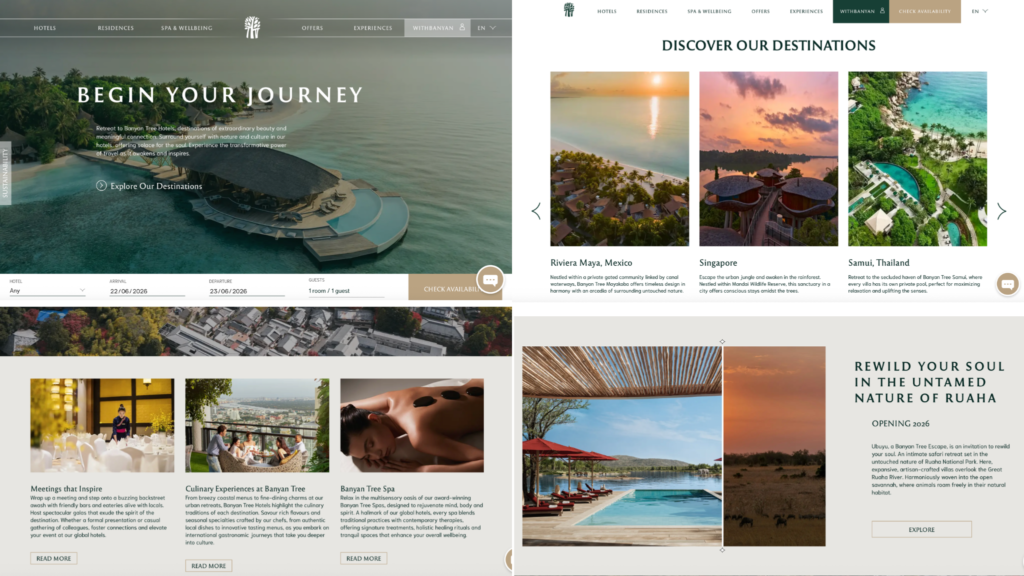
Banyan Tree Resorts website (Cinematic visual storytelling)
From a technical perspective, Banyan Tree implements lazy-loading protocols and strategic image compression, ensuring their visual-heavy design maintains sub-3-second load times. This demonstrates that premium aesthetics and performance need not be mutually exclusive.
Market evidence shows: According to TripAdvisor’s hospitality studies, properties that optimize their profiles with high-quality photo galleries see a 138% increase in traveler engagement and are 225% more likely to receive booking inquiries compared to those with no photos.
2. Mövenpick Hotels (Clarity over website decoration)
Mövenpick applies a simple architecture where content elements rarely exceed two-thirds of screen width, leaving empty space on the right. This conservative approach eliminates the visual clutter that Southeast Asian users often encounter when browsing on slow connections. Rather than exploring complex layouts, potential customers can focus on what matters (room rates, availability, and booking methods).
As users explore property pages, they encounter a sequence of information blocks separated by consistent spacing. The property title sits in a generous area, followed by large bedroom images, then descriptions, and finally the booking button. No endless scrolling: anyone can scan the page in 5 seconds and understand its basic structure. Other websites often cram in more information, creating a sense of chaos.
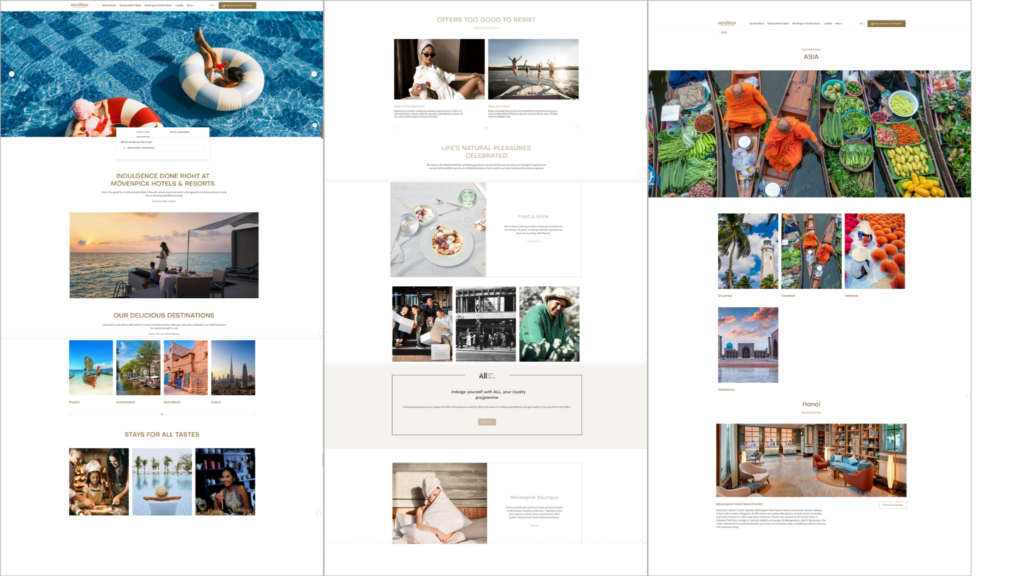
Mövenpick hotels & resorts website (Clarity over website decoration)
Moreover, Mövenpick doesn’t use complex nested dropdown menus. Instead, their navigation follows a simple linear model: Home > Properties > Location > Room Type > Details. This might seem tedious on a website with diverse options, but for a regional hotel chain, it makes sense. On mobile devices, the header shows only three elements: logo, property name, and hamburger menu. All other navigation is hidden until users need it. This approach is particularly effective in Southeast Asia, where most hotel website browsers use smartphones with small screens, often while on the move. The design doesn’t try to show everything at once; it acknowledges display limitations and works with them instead of against them.
3. Shangri-La Bangkok (Advanced booking engine & loyalty integration)
Shangri-La Bangkok’s website exemplifies sophisticated booking system architecture with integrated loyalty mechanics, which is a critical feature for capturing direct bookings in competitive Southeast Asian markets.
Advanced Features:
- Dynamic pricing models adjusting rates based on occupancy, seasonality, and member status
- Shangri-La Circle loyalty integration displaying member-exclusive rates and benefits directly in booking flows
- Bundled package offerings (accommodation + dining credit + spa experiences + wedding/event packages)
- Real-time room availability synchronized across multiple distribution channels
- Comparative rate displays across room categories with transparent pricing breakdowns
- Seasonal offers and celebration packages (anniversary promotions, family packages)
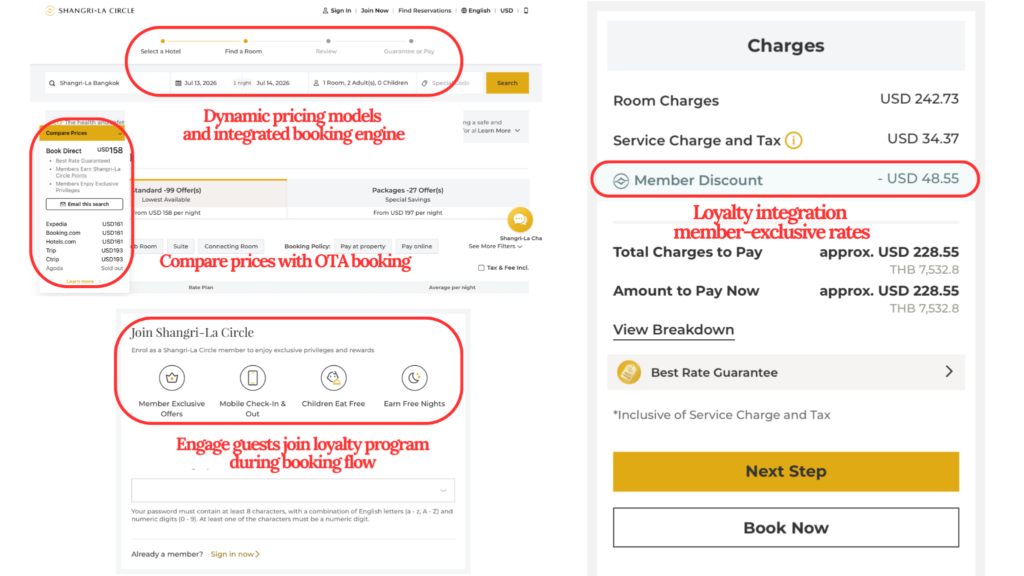
Shangri-La Bangkok website (Advanced booking engine & loyalty integration)
Research published via Hospitality Net in collaboration with Hospitality Financial Leadership highlights that Southeast Asian hotels pay an effective all-in rate of up to 28% in hidden OTA costs and program fees beyond headline commissions. Given that Southeast Asia remains one of the world’s most OTA-dependent markets (with intermediaries capturing nearly 69% of regional digital bookings), optimizing the direct booking stack is functionally critical to preserving hotel profitability. (Source: Hospitality Net – The Real Cost of Booking.com for SE Asian Hotels)
4. Four Seasons Chiang Mai (Multilingual content mastery)
Four Seasons Chiang Mai’s website showcases sophisticated multilingual implementation extending far beyond simple translation.
- 5-language support (English, Chinese, Arabic, German, Japanese)
- Currency-native pricing displays with local payment method integration
- Culturally-adapted imagery (family-oriented photography for Asian markets, couple-centric visuals for European audiences)
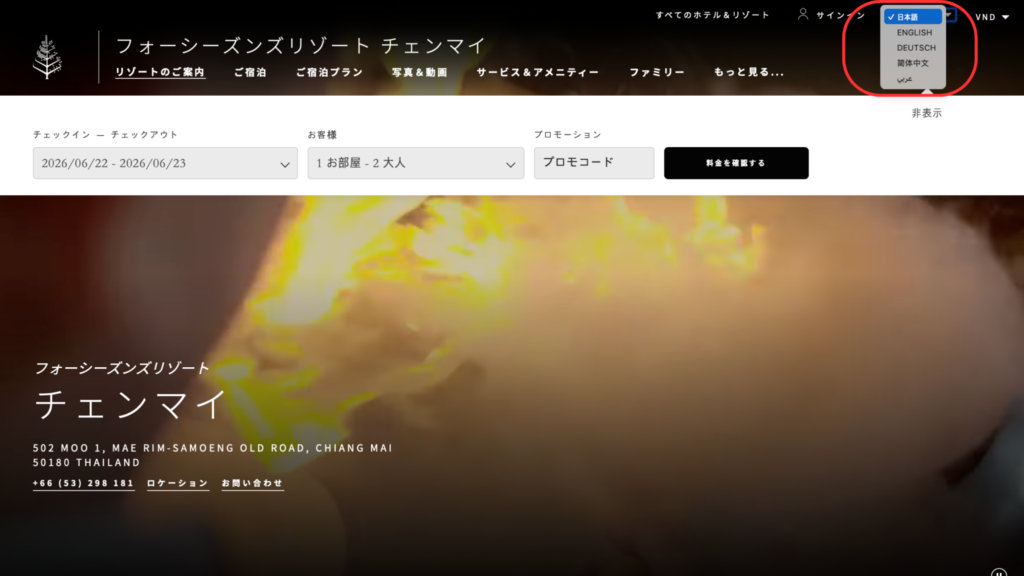
Four Seasons Chiang Mai website (Multilingual content mastery)
In reality, Global consumer studies by CSA Research reveal that 60% of international travelers rarely or never purchase from English-only websites, while 76% strictly prefer buying products with information in their native language. For premium properties, implementing a robust multilingual booking engine is not just an upgrade, but a financial necessity to prevent international traffic from defaulting to localized third-party OTAs.
5. JW Marriott Bangkok (360-degree virtual tour & immersive visual integration)
JW Marriott Bangkok’s website strategically integrates 360-degree virtual tour technology as a central booking enabler, allowing prospective guests to explore property amenities, themed suites, meeting spaces, and dining venues without physical site visits.
Photography transitions seamlessly across platform sections:
- Aerial property views establishing location context and architectural presence
- Room-level imagery showcasing bedroom configurations, bathroom amenities, window views
- Dining space panoramics featuring restaurant aesthetics (New York Steakhouse ambiance, JW Café industrial design)
- Spa and wellness environment photography
- Meeting space configurations with technology integration
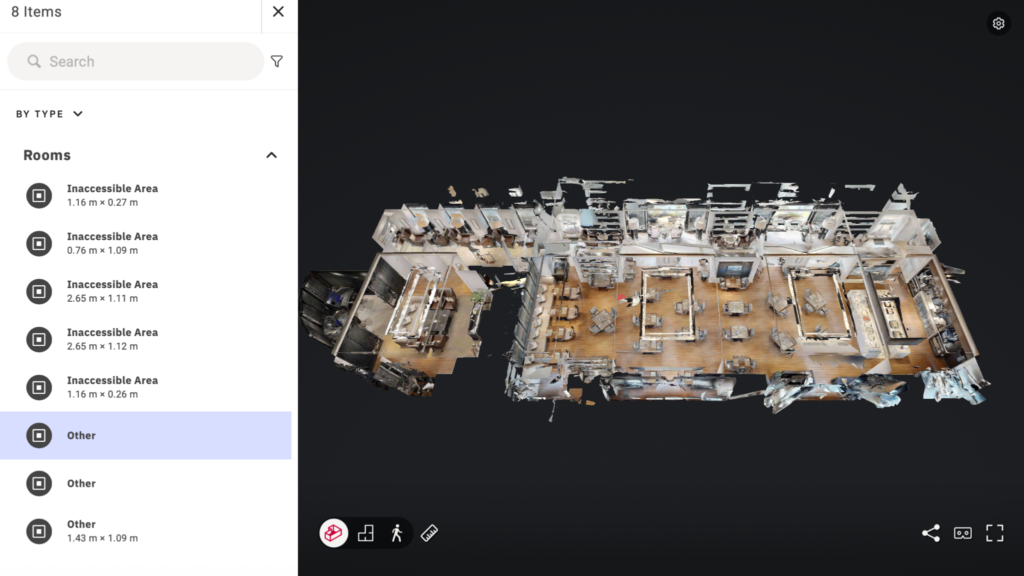
JW Marriott Bangkok website (360-degree virtual tour & immersive visual integration)
Critical elements every premium hotel website requires
After analyzing these 5 industry leaders, several important elements emerge:
1. Investment-grade visual design Premium accommodation photography, 3D photography and videography aren’t luxuries, they’re requirements. Guests make location and accommodation decisions based on visual presentations.
2. Conversion-first layout architecture Clarity over decoration, generous whitespace, and intuitive structural hierarchy aren’t design choices, they’re commercial requirements. Modern guests abandon cluttered sites and make direct booking decisions based on how effortlessly they can navigate and find transparent rate information.
3. Sophisticated booking systems Basic calendars and limited customization no longer suffice. Modern travelers expect dynamic pricing, package bundling, real-time availability, and comparison shopping.
Capitalizing on world-class web architecture: How Asia Golf Journey empowers regional hotels
The digital benchmarks established by Southeast Asia’s top 5 luxury hotel websites demonstrate that a premium online presence requires a seamless marriage of cinematic visual storytelling, conversion-first layout architecture, and highly integrated booking engines. However, for independent hotels across Vietnam and Southeast Asia, transforming a static informational website into a high-converting digital storefront can feel technically overwhelming.
As a specialized digital optimization and web conversion agency, AGJ bridges the gap between these enterprise-level five-star web strategies and regional hospitality operations.
Contact Asia Golf Journey to optimize and unlock unprecedented revenue growth through your website.
Email: creative@asiagolfjourney.com
Phone: +84 982 117 466
Website: www.asiagolfjourney.com
Asia Golf Journey – Trusted Marketing Partner for Successful Golf Leaders
#GolfMarketing #WebsiteDesign2026 #AsiaGolfJourney #VietnamGolf #WebsitePackage #HotelWebsite